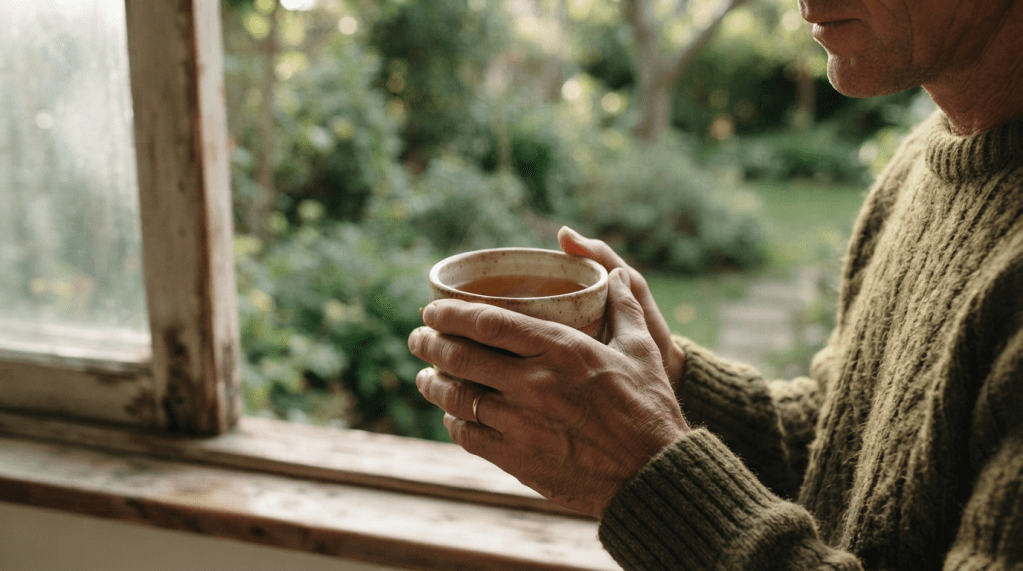
None of us can deny how exhausting our days have become, in every sense of the word. And it’s almost unbelievable, when you really sit with it, how many things in life alone invite quiet despair — never mind everything beyond it. There’s a strange irony in the fact that the very tools of this era, built to ease our burden, have become the source of it instead. Welcome to today’s world — where it’s become entirely ordinary for things to work against the very purpose they were made for.
And the cause, of course, isn’t the tools themselves, nor is it humanity in some special, damning way. It’s simply a misunderstanding — a failure on our part to grasp how things ought to be managed. We were never built for this particular kind of existence. It makes no sense that speaking in front of an audience should stir the same primal dread our ancestors felt standing before lions — and yet it does. Much like we misread the weight of technological change, we misunderstand a great deal else. Rest, among them, is what we’ll speak of today.
Modern approaches to rest often feel remarkably shallow — luxury resorts, indulgent meals, an endless parade of pleasures. And more astonishing still: within a single minute now, we can taste things that, under natural circumstances, would have been forbidden to us entirely. A few scrolls through short videos can flood our brains with more stimulation — more influence, more hormonal noise — than our ancestors encountered across weeks, even months, of their lives. And yet, in this paradox of an age, it’s plain to see that their time was far happier than ours. Year after year, the evidence only confirms what we suspected all along — that their quiet sorrow at the thought of how we live now was not misplaced. It spoke of something they understood clearly: the real difference between then and now.
Reflections on the Life We’re Actually Living
You already know the prevailing sentiment — that life shifted irreversibly around 2019. You can probably name the reasons yourself; the lockdowns chief among them. But why did that moment become such a violent turning point? Why does 2016, of all years, feel like a happier one to so many?
“Has time truly changed? A minute is still a minute. An hour is still an hour. A day is still a day.”
The lockdowns acted as a detonator for something that, under ordinary circumstances, would have taken far longer to surface. Our disconnection from the world in that period, our terrible descent into screens, showed us exactly what we were trading away for a fleeting hit of pleasure. What we exchange to keep pace with this accelerated world costs far more than we admit — our time, our happiness, our rest. Sit with each of these concepts for even half a day, and you’ll be stunned by how much weight they truly carry. What do we have, as human beings, beyond these things?

Step by Step
Let’s begin with the simplest concept — because it is, genuinely, the most misunderstood. If a person can’t set right the easy things, what foundation do they have to face the harder ones? A small note, in passing: respect your own humanity enough not to burden it with things far larger than it can carry. Begin step by step. Even the great rivers fill drop by drop.
Before I ask you anything, dear reader, I want you to answer me honestly: when was the last time you truly felt rest?
Rest Is Not…
I hope you took a moment to sit with that question. Now, come with me as we take the concept of rest apart, piece by piece — so you can know whether your answer was real, or just a passing flicker of inspiration. Because until you understand what rest actually means, you’ll never know if you’ve felt it before. Let’s clear away the illusions:
- Rest is not idleness, and it is not laziness.
- Rest is not lying in bed until eleven.
- Rest is not staying up until dawn.
- Rest is not drifting through time here and there without direction.
- And rest is not merely the satisfaction of physical desire, or a complete shutdown meant to conserve the body’s and mind’s energy.
Perhaps because the idea of “living” today has become so tightly bound to the rhythm of work and school, the financial system has, over the years, built a genuinely dangerous pattern — the pattern of working from this hour to that hour, enduring what we despise in exchange for scraps of time spent on anything but work. We’ve come to see our days off, or any time outside of work, as nothing more than an opportunity to not do that work. Nothing more. And that, honestly, is a kind of madness.
Our whole lives have become structured around avoiding certain things — nothing more. And often, our very selves get buried, crushed beneath this system. We’ve become ravenous, consuming creatures, seizing any opportunity to escape, however briefly. And that’s genuinely sad. I’m not asking you to love your work, or to only think about how you spend the hours outside it. I’m asking for something deeper than that.
“Are you truly living a life that satisfies you? If you aren’t genuinely at rest within your days, then you haven’t really lived at all. What energy could you possibly draw on to live the way you want, if you’re never actually at rest?”
The Essence of Rest: Contentment
I’d like to keep talking with you, dear reader, but today’s piece is already heavier than it perhaps should be — because it calls for real, root-level change within you, and that is never an easy thing. Your attention, the most precious thing you own, is under threat every single second, quite literally. To try, in the middle of all that, to take in something new — that requires real resolve.
To put it simply: to truly rest, you need to understand that rest has nothing to do with a holiday, or a lunch break. Rest, like work, is made of real actions — actions of genuine value, even if that value feels more abstract than what work offers. With work, you can see its worth clearly, in the money it earns you, for instance. Rest’s deeper impact, though, is psychological.
“And I’m certain that, at some point, despite the ache in your muscles and the weight of a difficult day, you’ve felt that stillness settle over you — simply because, in that moment, you were grateful, and you were content. That, precisely, is the essence of rest: contentment.”
Your Next Step
Allow me, if you’re genuinely committed, to offer a suggestion — one that uses a small quirk in how our minds handle decisive moments. Tie your intention to find true rest to something that unsettles you a little, something that, every time you remember it, reminds you that you haven’t yet reached real rest. In other words, commit yourself to it. I could suggest something like an awkward promise made to a friend, but honestly, it’s far simpler than that — you could just as easily claim to be resting in front of them without meaning it.
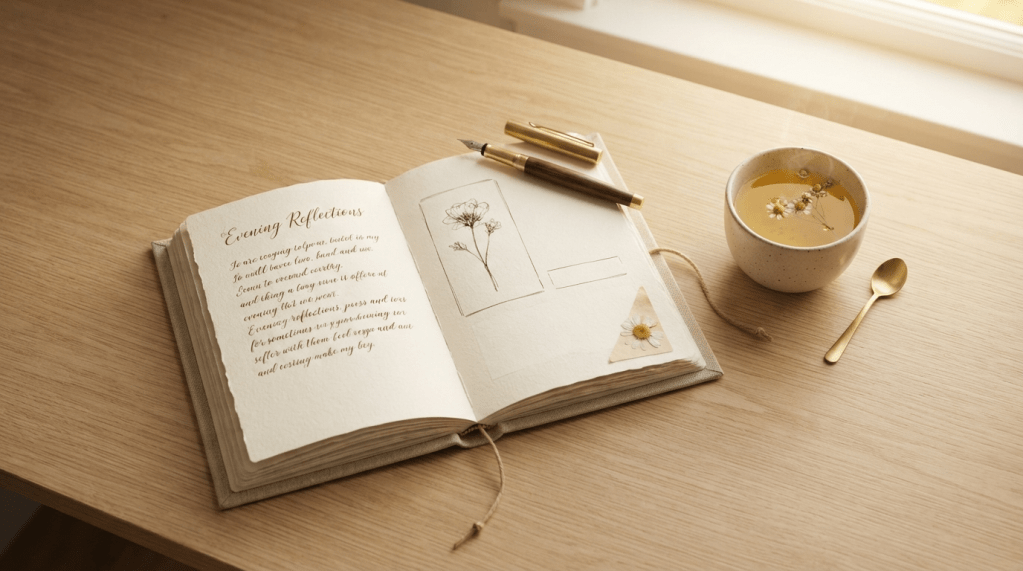
So instead, I want you to hold yourself accountable — not through spoken promise, but through real action. I’ve written a detailed bookthat explores these ideas further, and goes deeper still into concepts like value, along with more practical matters — like how we feel about returning to work after time off, and how to make peace with that feeling before the day even arrives. In the book, you’ll find three key concepts to help simplify your journey toward understanding rest on your own terms — not through anyone else’s template: value, rest, and the return. Alongside the book is a companion journal that walks beside it in its own way: it opens with the concept of value — your compass — then carries you day by day through the rhythm of rest itself: decompression, realignment, and positive output, with space on every page for your own reflections, so that you can measure your own progress, in your own words.
And before you leave this page frustrated, dear reader — this isn’t some poorly dressed-up sales pitch. You are under no obligation whatsoever to pay for anything you’re not genuinely convinced by. This is simply a suggestion, a way to push yourself forward, to hold yourself accountable to your own rational mind — which, let’s be honest, is remarkably skilled at punishing us. What matters most is that you pause with yourself for a while, and remember this, always: you are worth far more than to be toyed with by moving images, or by cold metal that can’t even feel you back.
We truly hope you find understanding on your journey.
You can find the digital bundle — the book and journal together, a journey that begins with understanding your own values, moves through the practice of rest, and ends with making peace with the return — on Etsy.
The book and journal are also available in print on Amazon, combined into a single printed edition. The print edition reflects an earlier telling of this same book — every word still true, though some of its language was written with summer in mind. A more universal telling is on its way, but this one carries the full journey just the same.
With all respect,
Younes Ashworth
And if you’d like to walk this journey with me, week by week, join the mailing list below — as a small welcome, you’ll receive a short reflection guide to help you begin.
 Equilibrium Way