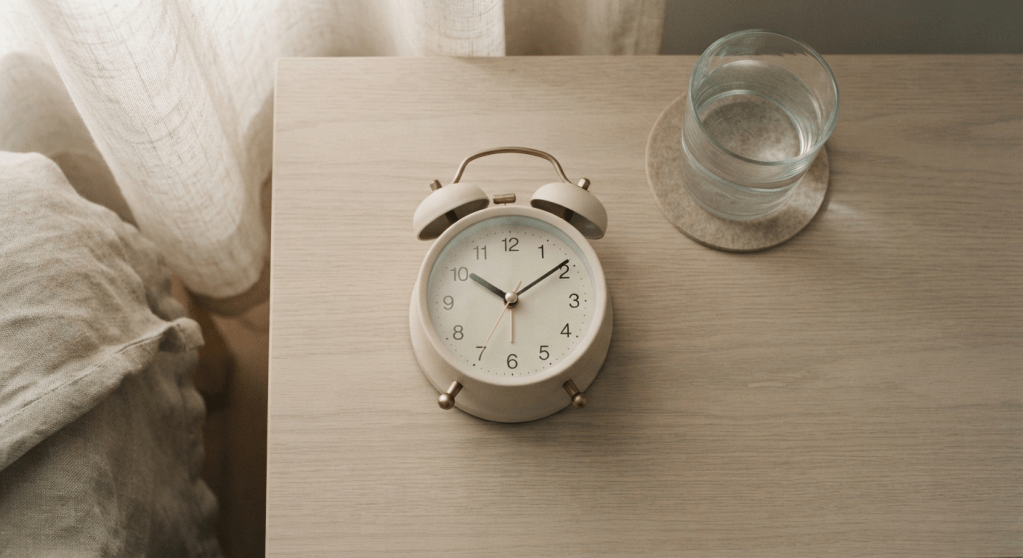
You wake up after a full night’s sleep, and still, something in you feels unfinished. Your body moved through every stage sleep is supposed to offer — yet you rise heavier than when you lay down, as though rest never actually arrived, only postponed itself until morning. This isn’t imagination, and it isn’t weakness. It’s a distinction most of us were never taught: sleep and rest are not the same thing.
Sleep is a biological process — the body cycling through its stages, repairing tissue, consolidating memory, regulating hormones. It happens whether or not you’re at peace. You can sleep eight hours in a state of quiet dread, and your body will still perform its mechanical duties. But rest — true rest — is something else entirely. It’s a nervous system that has actually been allowed to stand down, not merely paused between one demand and the next.
Sleep vs. Rest: What Actually Happens in the Body

When the mind carries unresolved tension into sleep — a conversation left unfinished, a worry never named, a day that ended without closure — the body doesn’t fully release into rest. The autonomic nervous system, the same system responsible for shifting us between alertness and calm, often stays partially activated even during sleep. This is why you can log a full eight hours and still wake with your shoulders tight, your jaw clenched, your mind already racing before your feet touch the floor.
This is not a flaw in your biology. It’s evidence that your body has been carrying something your mind never properly put down. Rest, in this sense, isn’t something that simply happens to you while unconscious — it’s something that requires a kind of permission, a genuine unloading, before sleep even begins.
This is precisely where the confusion of modern life does the most damage. We’re told that enough hours of sleep should fix everything — that exhaustion is purely a scheduling problem, solved with an earlier bedtime or a better mattress. But if the mind never learns to release what it’s holding, the body has nowhere to go but into a kind of standby mode: functioning, but never truly restored.
Real recovery asks for more than closed eyes. It asks for a deliberate unloading — a way of naming what the day left unresolved, so the body isn’t left to carry it silently through the night. This is the exact gap I explore more fully in “Understanding True Rest in a Fast-Paced World“ — why our modern understanding of recovery stops at sleep, and rarely asks what rest actually requires beneath it.
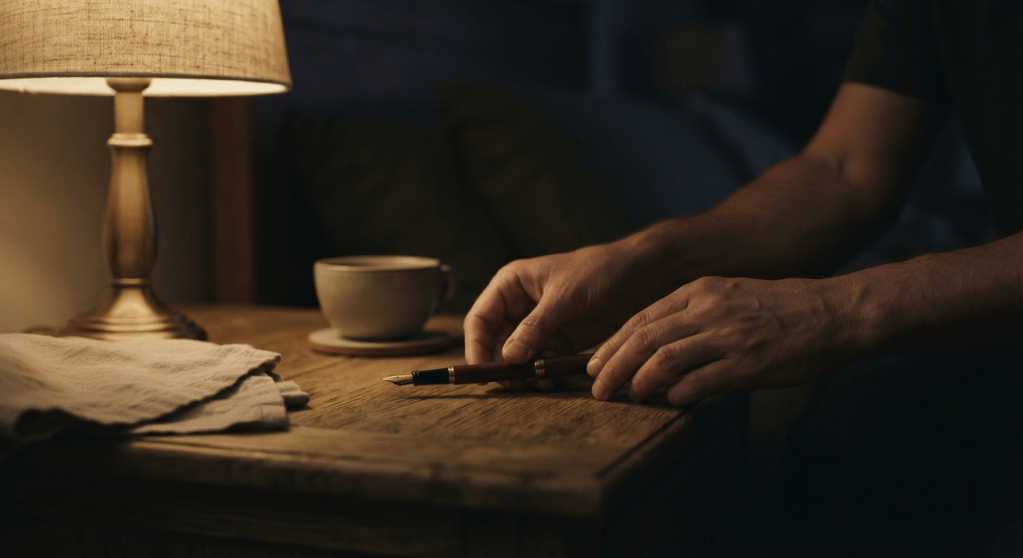
And if you’re looking for a structured way to practice this unloading — not just understand it in theory — this is precisely what the companion journal in The Art of Resting Well was built for: a daily space to put down what the day left unfinished, so your body has less to carry into the night, and more room to actually recover.
Ready to bring true rest into your daily life?
(Enjoy a limited-time 60% off launch discount. You can get the Journal alone, or choose the Complete Bundle to save an extra 28% compared to buying them separately).
If you found this helpful, you might also want to read the previous article, “Rest Was Never Meant to Be a Reward.“
And if you’d like to walk this journey with me, week by week, join the mailing list below — as a small welcome, you’ll receive a short reflection guide to help you begin.
 Equilibrium Way